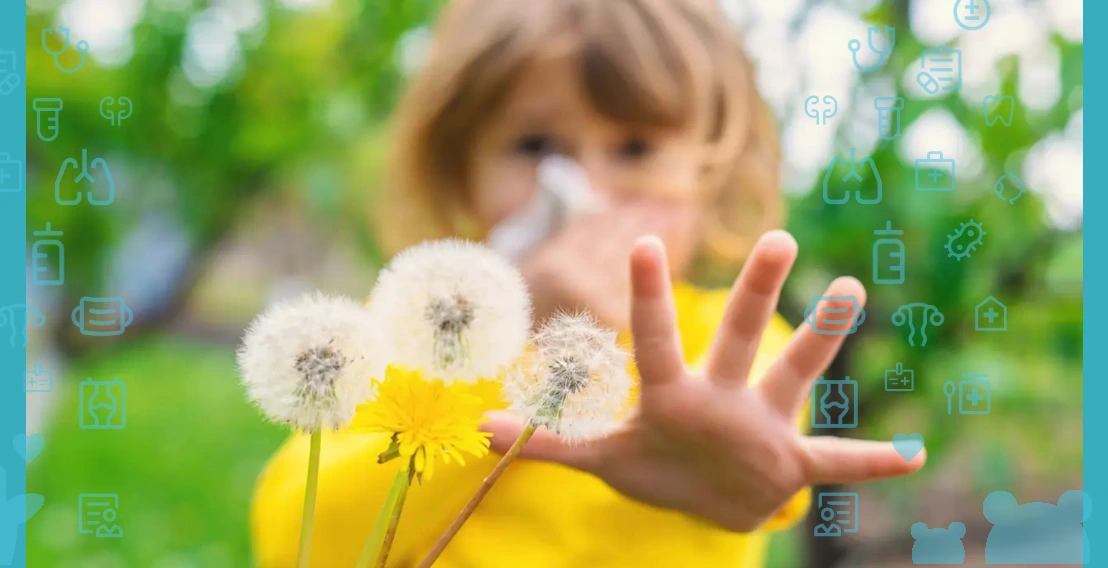
Allergies in children are not just a nuisance, but a medical condition that requires accurate diagnosis. Parents often try to guess the cause of rashes or a runny nose on their own, relying only on visible symptoms, but such actions usually do not give the desired result. The limitation of diagnosing only by symptoms is that allergic and non-allergic reactions often have the same manifestations. What looks like an allergy may turn out to be an infection, dermatitis, asthma or even a psychosomatic illness. In addition, a child may have simultaneous sensitivity to several allergens, which complicates self-diagnosis. Therefore, accurate identification of the allergen is of critical importance for the child's health, which serves as the basis for effective treatment.
How does allergy manifest itself in children and what symptoms should alert you?
The most common signs of allergy are skin reactions, which include:
- Rash – red spots or blisters appear on the skin;
- Swelling – most often noticeable in the area of the ears, lips, and eyelids;
- Itching - especially bothers the child at night;
- Dermatitis – redness, dryness, and peeling of the skin;
- Eczema is a chronic inflammatory process in which the skin peels, becomes cracked, and develops oozing rashes.
Another group of manifestations is respiratory symptoms, which are often associated with household or pollen allergens:
- itchy nose, sneezing (often serial);
- clear, odorless nasal discharge;
- nasal congestion, difficulty breathing through the nose;
- tearing;
- obsessive cough, especially noticeable at night or after contact with an allergen;
- sore or itchy throat.
In some cases, food reactions are observed:
- abdominal pain, cramps, diarrhea, constipation;
- heartburn, nausea, vomiting;
- aphthous ulcers on the oral mucosa;
- swelling of the lips, tongue, throat (this is a dangerous symptom that requires immediate medical attention);
- anaphylaxis with a drop in blood pressure and loss of consciousness (occurs in severe cases, requires emergency medical attention).
Understanding what an allergy looks like helps you consult a specialist in a timely manner and avoid dangerous situations, prevent the development of complications and the transition of pathology into chronic conditions.
Main types of allergies in children
There are 3 main types of allergies: food, household and pollen (hay fever). The food variety is most common in children, accounting for 6-8% of all allergies in toddlers. Household allergens that surround the child everywhere are among the most common causes of year-round rhinitis and asthma in children.
| Type of allergy | Typical triggers | Main features |
|---|---|---|
| Food |
|
|
| Household |
|
|
| Pilkova |
|
|
What tests help detect allergies?
When are tests prescribed and what tests are given for allergies in children?
A pediatrician or allergist recommends taking blood tests for allergies if:- there are characteristic symptoms that often recur;
- family history of allergies;
- It is necessary to conduct differential diagnostics (to distinguish allergies from other diseases).
What tests should be taken for allergies? The following are most often used to make a diagnosis:
- complete blood count – shows the concentration of eosinophils (cells that respond to allergies, inflammation and parasites);
- blood test for total immunoglobulin (total IgE) – measures the total level of antibodies responsible for allergic reactions;
- specific IgE – venous blood test for specific irritants;
- skin tests (prick test, scarification test) – a small amount of allergen is applied to the skin and the reaction is assessed
Allergy in a child is not a diagnosis “by sight.” Only laboratory tests can accurately identify the allergen and avoid both unnecessary dietary restrictions and the risk of serious reactions.

What tests detect allergies and how are they interpreted?
The doctor will refer you for an examination if:- allergic reactions significantly worsen the child's quality of life or cause chronic diseases (for example, adenoiditis);
- it is necessary to distinguish an allergy from a viral infection;
- Immunostimulating therapy is planned.
An allergist will tell you which tests show allergies. The doctor must also interpret the results, which will ensure the correct diagnosis. For example, a high level of specific IgE antibodies confirms sensitivity to a specific substance, but the result is always compared with the clinical picture.
Allergy panels: food, household and pollen
Allergy panels are comprehensive tests that allow you to simultaneously check the reaction to dozens of irritants.
Allergy panels are characterized by the following advantages:
- save time (one analysis instead of several);
- reduce research costs;
- cover the most common allergens in each category;
- provide an overall picture of allergic tension.
But they also have disadvantages:
- less personalization (rare allergens can be omitted);
- difficulties in interpreting results with multiple positivity.
There are 3 groups of allergy panels: food, household, and pollen.
| Type of allergy panel | Typical panel content | Additional ingredients included in the extended panel | Using |
|---|---|---|---|
| Food |
|
|
|
| Household |
|
|
|
| Pilkova |
|
|
|
How is allergy diagnosed in a child?
To get an accurate result, you should prepare properly:
- 5-7 days before donating blood, with the doctor's approval, stop using local corticosteroids and taking antihistamines - they can give false-negative results in skin tests;
- Refrain from eating 2-3 hours before the procedure – blood must be donated on an empty stomach.
Blood (3-5 ml) is taken from children's veins using thin butterfly needles, which minimize discomfort.
Rapid test results can be obtained in as little as 20-30 minutes. Standard laboratory tests take 3-7 business days, and extended panels take up to 2 weeks.
Why you can't rely only on symptoms without tests
It is strictly forbidden to engage in self-diagnosis, which is explained by several reasons:- Ambiguity of symptoms
- Itchy skin and rashes can be a concern with allergies, eczema, contact dermatitis, infections, insufficient air humidity, and stressful situations;
- a runny nose can be caused by allergies, viruses, bacterial infections, or cold air;
- Diarrhea can be a consequence of allergies, malnutrition, infectious diseases, or insufficient enzyme production.
- Cross-reactions
- The same symptoms can have different causes:
A person may not be sensitive to milk itself, but to milk protein, which in the finished food denatures during heat treatment. In addition, an allergy to birch pollen can cause a reaction when eating raw apples (oral allergy syndrome), although apples are not the allergen in such cases.
- Overlapping of multiple factors
- Psychosomatic reactions
In older children, itching and rashes can arise from neurotic disorders. In this case, parents who are sure that the child has allergies increase the child's anxiety, which worsens the symptoms.
Laboratory confirmation, which provides objective information, is important for making a diagnosis:
- shows the real, not the supposed, causes of reactions;
- detects specific antibodies even in the absence of symptoms;
- allows you to eliminate allergens that parents mistakenly thought of.
- unnecessarily exclude healthy foods, limiting the child's diet, which can lead to the development of anemia;
- spend money on unnecessary medications that negatively affect the child's health;
- they do not solve the problem because they do not know the true cause of the symptoms;
- may miss dangerous reactions that require specialized treatment.
What to do after receiving test results
After receiving the diagnostic results, you should contact a pediatric allergist . Based on the information received and the symptoms, the doctor will select treatment, which, depending on the severity of the condition, may include taking antihistamines, systemic corticosteroids, using local remedies, and conducting ASIT (allergen-specific immunotherapy).
In case of food allergies, an allergist develops an elimination diet - for a period of 2 weeks to 2 months, suspicious foods are completely removed from the diet. Then they are gradually returned one by one to monitor the body's reaction.
In case of household and pollen forms, correction of the environment will be required. In case of allergy to dust mites, it is necessary to regularly carry out wet cleaning of the apartment, change and wash bed linen weekly in hot water, and get rid of carpets if possible. In case of pollen allergy, you should close the windows during the flowering period, change clothes after returning from the street, wash your face and rinse your nasal passages.